
Introduction
Introduction
Introduction
Lucis.ai is designed for individuals hesitant to share their mental health struggles with strangers or professionals. It provides a confidential AI-driven platform to guide users with empathy and care.
Lucis.ai is designed for individuals hesitant to share their mental health struggles with strangers or professionals. It provides a confidential AI-driven platform to guide users with empathy and care.
Lucis.ai is designed for individuals hesitant to share their mental health struggles with strangers or professionals. It provides a confidential AI-driven platform to guide users with empathy and care.
Overview
Overview
Overview
In this project, I designed an AI-driven mental health platform offering private, empathetic support. Through empathy maps, personas, and user research, I uncovered key user needs like anonymity and personalized AI interactions. By iterating on prototypes based on feedback, I ensured the design was user-centered and accessible. This process sharpened my skills in balancing technology with empathy. Next, I plan to conduct usability testing to refine the AI’s responsiveness and enhance the overall user experience.
In this project, I designed an AI-driven mental health platform offering private, empathetic support. Through empathy maps, personas, and user research, I uncovered key user needs like anonymity and personalized AI interactions. By iterating on prototypes based on feedback, I ensured the design was user-centered and accessible. This process sharpened my skills in balancing technology with empathy. Next, I plan to conduct usability testing to refine the AI’s responsiveness and enhance the overall user experience.
In this project, I designed an AI-driven mental health platform offering private, empathetic support. Through empathy maps, personas, and user research, I uncovered key user needs like anonymity and personalized AI interactions. By iterating on prototypes based on feedback, I ensured the design was user-centered and accessible. This process sharpened my skills in balancing technology with empathy. Next, I plan to conduct usability testing to refine the AI’s responsiveness and enhance the overall user experience.
Role
Role
Role
UX Researcher
UX Researcher
UX Researcher
UX Designer
UX Designer
UX Designer
Interaction Designer
Interaction Designer
Interaction Designer
Strategist
Strategist
Strategist
Design and Research Tools
Design and Research Tools
Design and Research Tools
Figma
Figma
Figma
ChatGPT
ChatGPT
ChatGPT
Leonardo.ai
Leonardo.ai
Leonardo.ai
Highlights
Highlights


Context
Context
Helping You Talk About What’s Hard to Say
Helping You Talk About What’s Hard to Say
A safe, private way to navigate mental health with AI
A safe, private way to navigate mental health with AI
Struggling silently with mental health is more common than you think. What if there was a judgment-free zone to explore your thoughts at your own pace? This project aims to provide that space—offering empathetic AI support and professional help, tailored to your comfort.
Struggling silently with mental health is more common than you think. What if there was a judgment-free zone to explore your thoughts at your own pace? This project aims to provide that space—offering empathetic AI support and professional help, tailored to your comfort.

Problem Statement
Problem Statement
Why Is It So Hard to Ask for Help?
Why Is It So Hard to Ask for Help?
Tackling fear, privacy, and the stigma of opening up
Tackling fear, privacy, and the stigma of opening up
Many people feel stuck when it comes to opening up about their mental health—fear of judgment, lack of privacy, or simply not knowing where to start. This project tackles these hurdles by offering a confidential, AI-driven solution that feels personal, empathetic, and accessible anytime.
Many people feel stuck when it comes to opening up about their mental health—fear of judgment, lack of privacy, or simply not knowing where to start. This project tackles these hurdles by offering a confidential, AI-driven solution that feels personal, empathetic, and accessible anytime.
the challenge
the challenge
Designing an AI tool that feels human and empathetic while ensuring privacy, so users feel comfortable accessing mental health support without fear of judgment.
Designing an AI tool that feels human and empathetic while ensuring privacy, so users feel comfortable accessing mental health support without fear of judgment.
Outcome
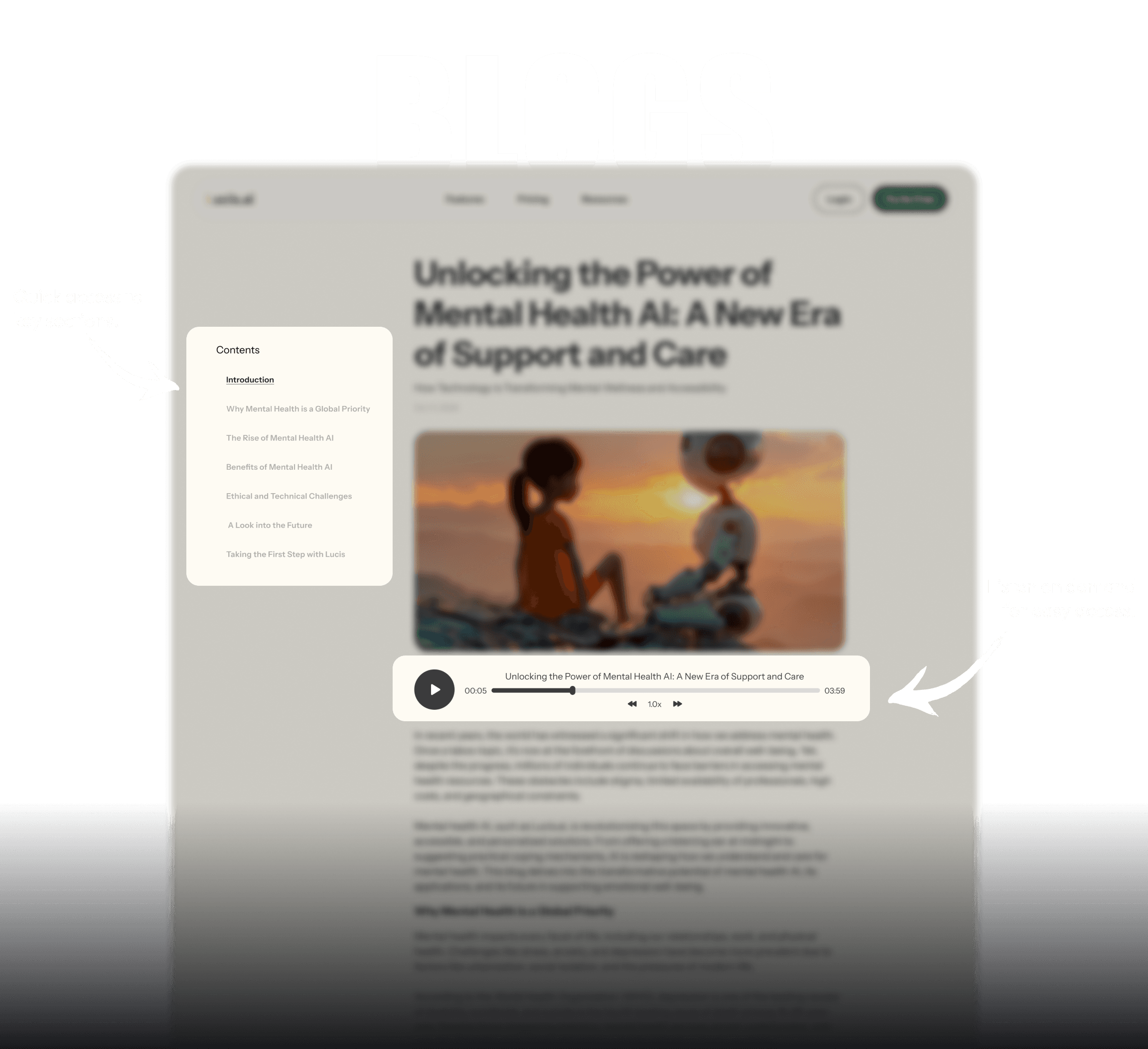
85% of users engaged with AI chat without sign-ups, lowering entry barriers for seeking help.
85% of users engaged with AI chat without sign-ups, lowering entry barriers for seeking help.
A streamlined interface ensures easy navigation, reducing cognitive load during distress.
A streamlined interface ensures easy navigation, reducing cognitive load during distress.
AI-powered blog reading and recommended resources provide personalized, on-demand support.
AI-powered blog reading and recommended resources provide personalized, on-demand support.

Research
Research
Privacy and Empathy Take Center Stage.
Privacy and Empathy Take Center Stage.
80% of participants prefer anonymous AI support.
80% of participants prefer anonymous AI support.
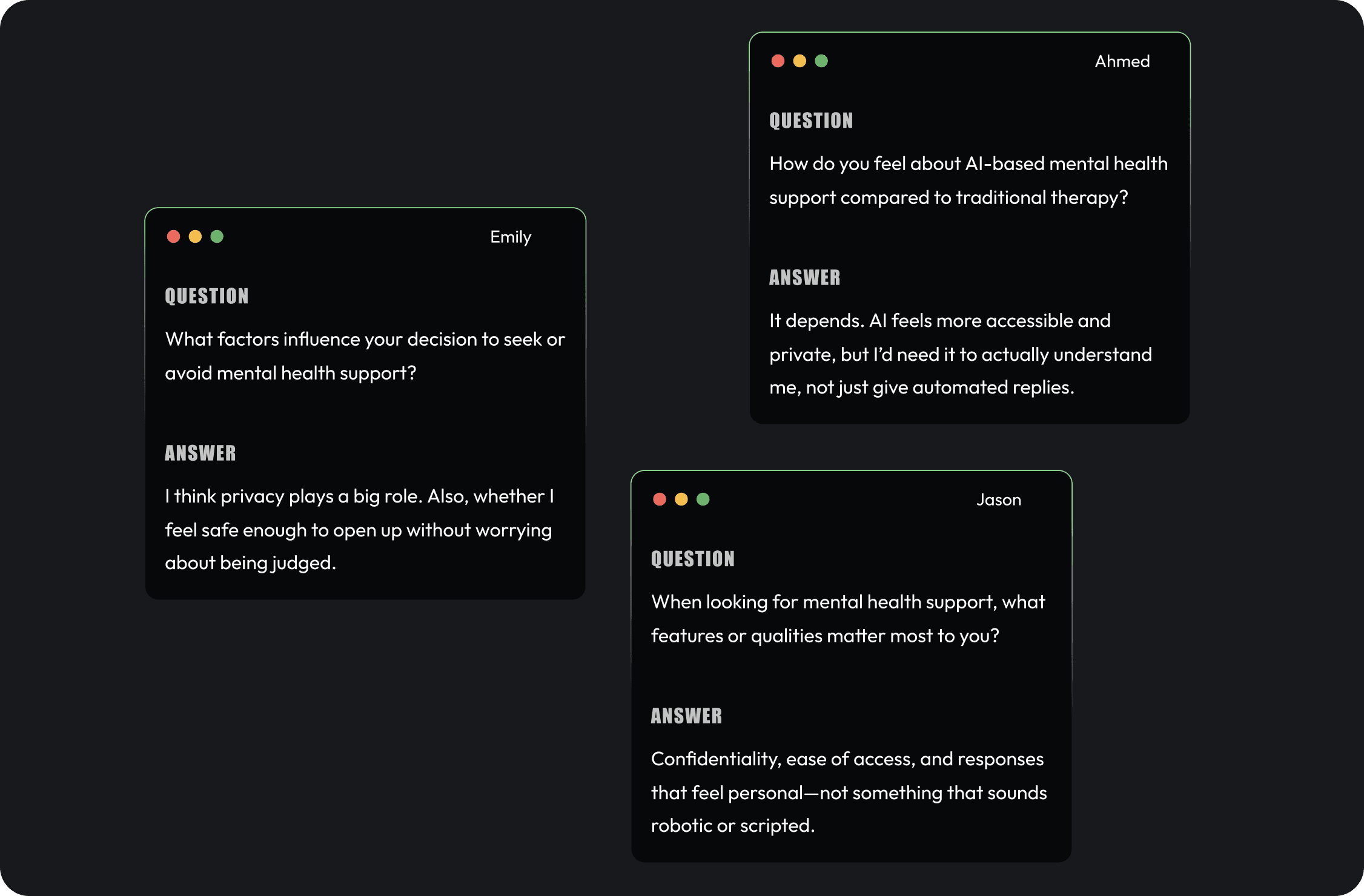
In a survey of five participants managing anxiety and stress, 4 out of 5 emphasized the importance of privacy and fear of judgment as key barriers to seeking therapy. Their responses highlighted a strong preference for anonymous, empathetic AI solutions, underlining the need for a personalized, non-intrusive approach to mental health support.
In a survey of five participants managing anxiety and stress, 4 out of 5 emphasized the importance of privacy and fear of judgment as key barriers to seeking therapy. Their responses highlighted a strong preference for anonymous, empathetic AI solutions, underlining the need for a personalized, non-intrusive approach to mental health support.
Creating Empathy Maps
Creating Empathy Maps
I created 4 empathy maps to dive deeper into the users’ emotions, fears, and motivations regarding mental health support. These maps highlighted recurring themes like privacy concerns, fear of judgment, and the need for personalized, empathetic AI interactions. Below is a snapshot of one of these maps, reflecting key user insights and guiding design decisions.
I created 4 empathy maps to dive deeper into the users’ emotions, fears, and motivations regarding mental health support. These maps highlighted recurring themes like privacy concerns, fear of judgment, and the need for personalized, empathetic AI interactions. Below is a snapshot of one of these maps, reflecting key user insights and guiding design decisions.

insights
insights
Key Insights from User Research
Key Insights from User Research
Understanding User Needs in Mental Health Support
Understanding User Needs in Mental Health Support
Anonymity First
Anonymity First
75% value complete privacy when seeking help.
75% value complete privacy when seeking help.
Personalized Empathy
Personalized Empathy
60% prefer AI that adapts to their emotional state.
60% prefer AI that adapts to their emotional state.
Fear of Judgment
Fear of Judgment
80% avoid seeking help due to stigma concerns.
80% avoid seeking help due to stigma concerns.
Visualizing User Experiences.
Visualizing User Experiences.
Storyboards showcasing Emily’s journey with AI mental health support
Storyboards showcasing Emily’s journey with AI mental health support
The storyboards capture Emily’s journey from stress to calm, showing how the AI tool addresses her struggles step by step. The Big Picture highlights her emotional transformation, while the Close-Up focuses on her interaction with the AI. These visuals helped me understand user behavior better and refine the tool to provide personalized, empathetic support.
The storyboards capture Emily’s journey from stress to calm, showing how the AI tool addresses her struggles step by step. The Big Picture highlights her emotional transformation, while the Close-Up focuses on her interaction with the AI. These visuals helped me understand user behavior better and refine the tool to provide personalized, empathetic support.
Big Picture Storyboard

Close-up Storyboard

Analysis
Analysis
Turning Insights into Action.
Turning Insights into Action.
Bridging user needs and design decisions
Bridging user needs and design decisions
The analysis phase allowed me to transform raw research insights into clear design directions. By synthesizing data from surveys, empathy maps, and personas, I was able to uncover common themes and user pain points that shaped every design decision. This step was essential to ensuring the final product truly addressed users’ needs, making sure that the AI mental health tool wasn’t just functional but also meaningful to its users.
The analysis phase allowed me to transform raw research insights into clear design directions. By synthesizing data from surveys, empathy maps, and personas, I was able to uncover common themes and user pain points that shaped every design decision. This step was essential to ensuring the final product truly addressed users’ needs, making sure that the AI mental health tool wasn’t just functional but also meaningful to its users.
Overwhelmed and exhausted
Overwhelmed and exhausted
Users felt too stressed to even consider traditional therapy options, so I aimed to simplify access to support and reduce friction in using the AI tool.
Users felt too stressed to even consider traditional therapy options, so I aimed to simplify access to support and reduce friction in using the AI tool.
Preference for non-judgmental help
Preference for non-judgmental help
As highlighted in the research, privacy and judgment were barriers to seeking support, so I focused on making interactions feel safe, warm, and understanding.
As highlighted in the research, privacy and judgment were barriers to seeking support, so I focused on making interactions feel safe, warm, and understanding.
If/Then Scenarios.
If/Then Scenarios.
Turning challenges into opportunities
Turning challenges into opportunities
The "If/Then" statements outline practical responses to users' struggles, helping me focus on building features that truly matter. This visual breaks down how tailored solutions meet specific needs.
The "If/Then" statements outline practical responses to users' struggles, helping me focus on building features that truly matter. This visual breaks down how tailored solutions meet specific needs.

The Core Promise.
The Core Promise.
What makes this platform unique
What makes this platform unique
The value proposition defines the heart of the platform—providing private, round-the-clock support tailored to each user’s needs. The visual highlights how these principles translate into a safe, empowering space for mental health.
The value proposition defines the heart of the platform—providing private, round-the-clock support tailored to each user’s needs. The visual highlights how these principles translate into a safe, empowering space for mental health.

Exploring Challenges Together
Exploring Challenges Together
Turning questions into opportunities for real impact
Turning questions into opportunities for real impact
Through the "How Might We" exercise, I explored ways to address users' mental health challenges by reframing them into actionable questions. The visual below captures this user-centered approach to brainstorming impactful solutions.
Through the "How Might We" exercise, I explored ways to address users' mental health challenges by reframing them into actionable questions. The visual below captures this user-centered approach to brainstorming impactful solutions.

VISUAL DESIGN DIRECTION
Crafting the Experience
Crafting the Experience
From Wireframes to Interactions
From Wireframes to Interactions
Designing this platform was all about creating an experience that feels natural and supportive for users. I started with simple wireframes to outline key functions and moved through low-fidelity and high-fidelity prototypes to refine every detail. My goal was to make the interface approachable and intuitive, minimizing stress for users seeking mental health support. The final result was a thoughtfully designed platform with seamless interactions that guide users effortlessly toward the help they need.
Designing this platform was all about creating an experience that feels natural and supportive for users. I started with simple wireframes to outline key functions and moved through low-fidelity and high-fidelity prototypes to refine every detail. My goal was to make the interface approachable and intuitive, minimizing stress for users seeking mental health support. The final result was a thoughtfully designed platform with seamless interactions that guide users effortlessly toward the help they need.
Snippets of
Snippets of


Typography That Speaks Comfort
Typography That Speaks Comfort
Typography That Speaks Comfort
Carefully chosen fonts ensure readability and a calm, inviting experience. The right typography builds trust, guiding users through their journey with clarity and ease.
Carefully chosen fonts ensure readability and a calm, inviting experience. The right typography builds trust, guiding users through their journey with clarity and ease.

FINAL DESIGNS
FINAL DESIGNS
Bringing It All Together
Bringing It All Together
The final experience, refined and ready
The final experience, refined and ready
Every detail, from interactions to visuals, has been crafted for a seamless and intuitive experience. The final designs reflect a balance of usability, accessibility, and emotional connection—ensuring users feel supported every step of the way.
Every detail, from interactions to visuals, has been crafted for a seamless and intuitive experience. The final designs reflect a balance of usability, accessibility, and emotional connection—ensuring users feel supported every step of the way.


Final Thoughts
Final Thoughts
Wrapping up the journey.
Wrapping up the journey.
What I Achieved
A user-first approach led to an intuitive, judgment-free space for mental health support, blending AI assistance with accessibility and trust.
A user-first approach led to an intuitive, judgment-free space for mental health support, blending AI assistance with accessibility and trust.
Project Takeaways
Human-Centered Design Matters
Human-Centered Design Matters
Crafting for mental health reinforced the importance of accessibility, trust, and seamless UX, ensuring users feel safe and supported.
Crafting for mental health reinforced the importance of accessibility, trust, and seamless UX, ensuring users feel safe and supported.
Iterate & Personalize
Iterate & Personalize
Enhancing AI responses through usability testing and real user insights to create more adaptive, context-aware interactions.
Enhancing AI responses through usability testing and real user insights to create more adaptive, context-aware interactions.
Bridging AI & Human Support
Bridging AI & Human Support
Exploring omnichannel experiences where users can transition from AI to professional help effortlessly and intuitively.
Exploring omnichannel experiences where users can transition from AI to professional help effortlessly and intuitively.

Interested in working together?
Interested in working together?
Interested in working together?